

 4.8
Are Mobility Scooters and Electric Wheelchairs Allowed on the Road? Rules for All 50 States
Last reviewed October 2026. This is a general guide for the United States, not legal advice. Local city and county rules can add limits, so check with your own municipality before you ride on any road.
Yes. In most US states a mobility scooter or an electric wheelchair is allowed on the road, but the rule is narrower than most people expect. The law treats the person riding one as a pedestrian rather than a driver, so the device belongs on the sidewalk first and uses the edge of the road only where no usable sidewalk exists. That pedestrian status is also why you do not need a driver license, a registration or vehicle insurance to use one. The two things that change the answer are speed, because a 4 mph chair and a 25 mph standing scooter are not the same thing to a traffic code, and your state, because every state writes its own wording. The table further down gives the rule and the statute for all 50 states and the District of Columbia.
Our picks at a glance
- Top Pick
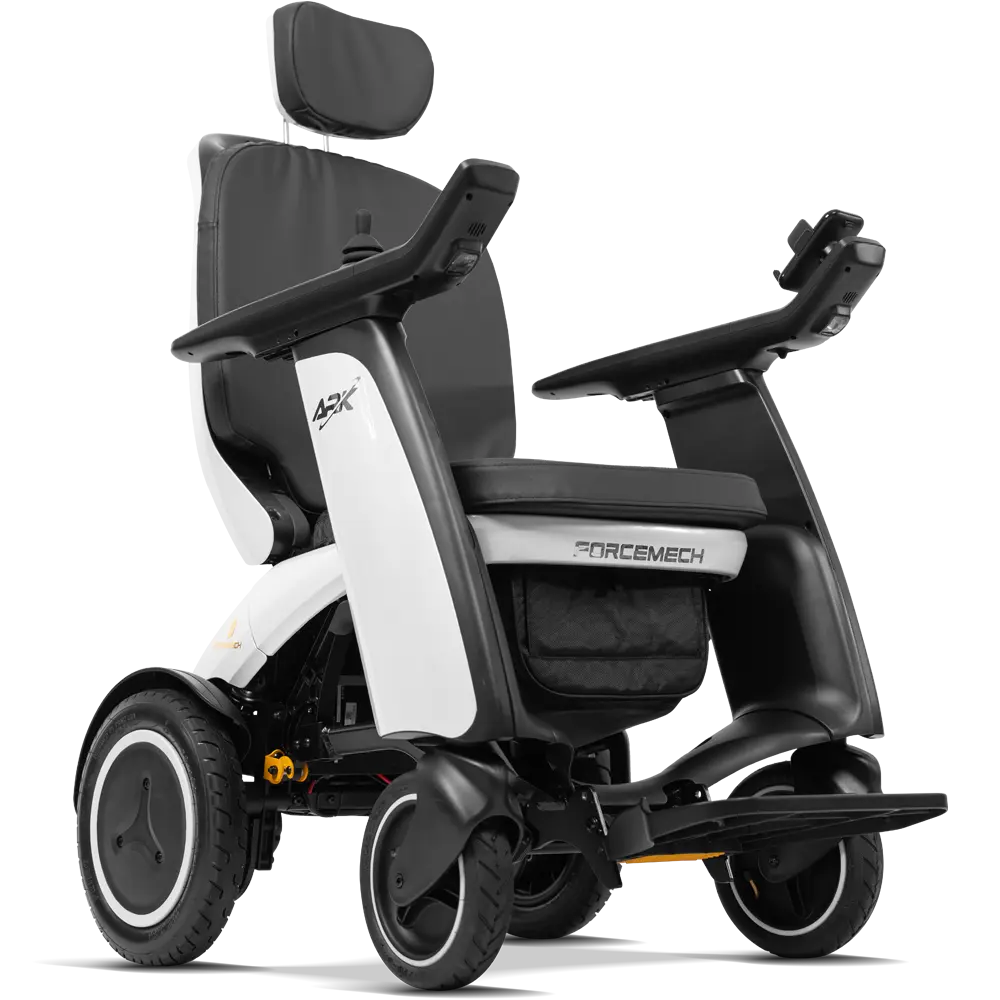
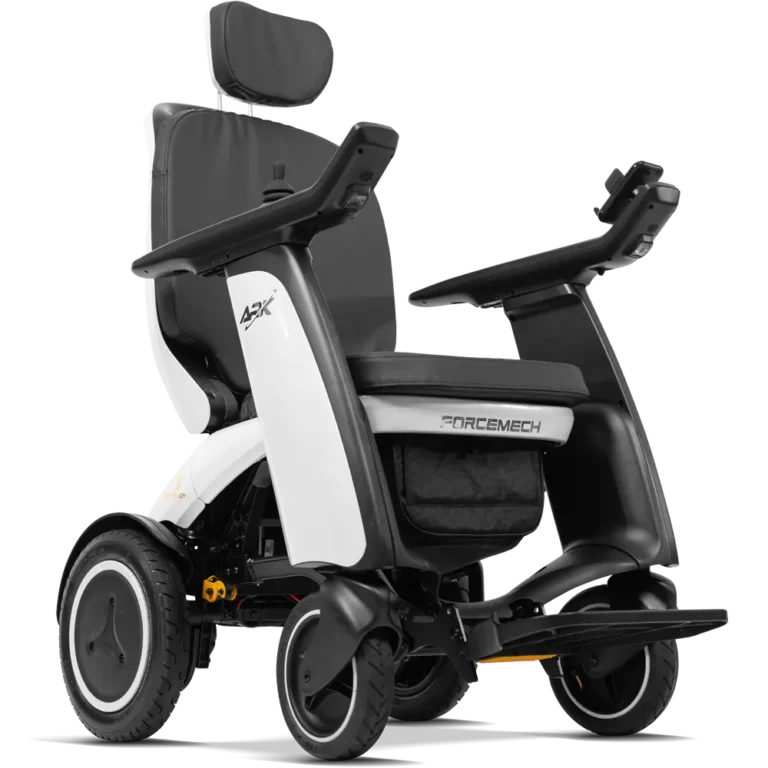 Forcemech ARK Travel-Ready Portable Electric Wheelchair
- Maximum Speed4 mph
- Maximum Travel Range15 Miles
- Maximum Loading Capacity330 lbs
$7,198View details 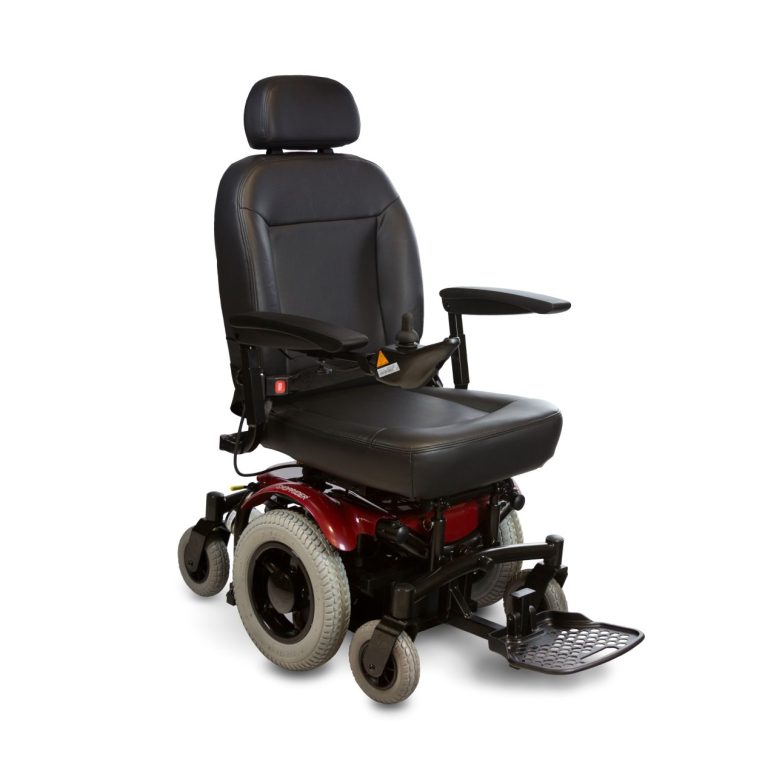 Shoprider 6Runner 14 Heavy Duty Electric Wheelchair – 888WNLLHD
- Maximum Speed5 mph
- Maximum Weight Capacity450 lbs
- Range (Per Charge)21.3 - 23.8 miles
$5,769View details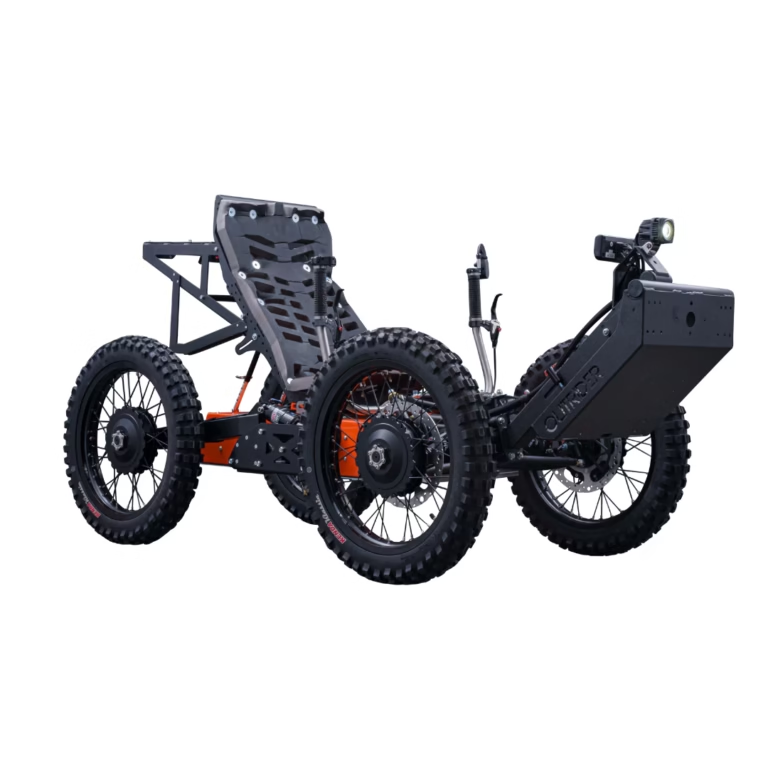 Outrider Coyote 4WD All Terrain 4×4 Wheelchair
- Top Speed17 mph
- Max Range120 miles
- PowertrainQuad-motor 4WD
$22,485View details
Are mobility scooters and electric wheelchairs allowed on the road in the US?
In most US states, yes, but as a pedestrian device, not a road vehicle. A standard electric wheelchair or mobility scooter rides the sidewalk wherever one exists and may use the road edge, facing oncoming traffic, only where no usable sidewalk is available. Because it is classed with people on foot, the three things riders worry about most are settled in the states that follow this rule. You do not need a driver license. You do not need to register the device or hang a plate on it. You do not need vehicle insurance to ride it.
The variable that changes this clean answer is speed. A chair or scooter that tops out at 4 to 8 mph is the clean case everywhere, since that is walking to jogging pace and it sits under every speed cap a state writes into its definition. A fast recreational machine that reaches 17 to 25 mph starts to interact with road and vehicle law in a way a slow one never does, which is where the road edge question gets real.
One caveat up front. The rules here come from the federal Americans with Disabilities Act framework and from each state's own traffic code, read on the state legislature's site in October 2026, and this is general information rather than legal advice. State codes differ in their wording, several leave sidewalk rules to cities, and legislatures amend traffic law every session, so check your own state and local rules before you take a chair or scooter onto a roadway.
Are electric wheelchairs and mobility scooters pedestrians or vehicles?
A standard electric wheelchair or mobility scooter used by a person with a disability is legally a pedestrian in most US states, not a motor vehicle. That single classification is what decides everything else. Because the device sits in the pedestrian category, pedestrian law governs where and how you ride, so you use sidewalks, crosswalks and pedestrian signals the same way a person walking would.
States get there by three routes. Some define the word pedestrian to include a person in a wheelchair, as New York, Nevada and Minnesota do, California does it for a person with a physical disability using a self propelled wheelchair, and Texas does the same for a motorized mobility device. Some leave the pedestrian definition alone and instead carve the device out of the word vehicle or motor vehicle, as Massachusetts, Missouri and Indiana do, so the licensing and registration chapters never reach it even though the statute never calls the rider a pedestrian. A third group states the rule directly, as Illinois, Oklahoma and Rhode Island do, by giving every person operating a motorized wheelchair the rights and duties of a pedestrian. A handful of states, among them New Mexico, North Dakota and South Carolina, never name wheelchairs or mobility scooters at all, and there the pedestrian rules are what everyone follows in practice without a statute saying so.
In practice, pedestrian classification means the rules that govern cars simply do not attach to your chair. A motor vehicle has to be registered with the state, carry insurance and be operated by a licensed driver on the roadway. A pedestrian classed mobility device carries none of that weight. You cross at crosswalks, you obey walk and do not walk signals, and you keep to the spaces set aside for people on foot.
What federal law says, the ADA and power driven mobility devices
Federal law under the Americans with Disabilities Act protects a wheelchair user's access to sidewalks, crosswalks and public pedestrian areas as a baseline that every state builds on. The ADA does not hand out road permits, but it does establish that a power wheelchair or mobility scooter is a legitimate mobility device for a person with a disability, and that public entities and businesses have to accommodate it in pedestrian space.
The Justice Department's ADA regulations define a wheelchair as a manually operated or power driven device designed primarily for use by a person with a mobility disability for the main purpose of indoor, or both indoor and outdoor, movement. A device that fits that definition has to be allowed in any area open to pedestrian use. That is an access rule, not a traffic rule. Whether you count as a pedestrian on a road, and whether you need a license, is decided by your state's traffic code, not by the ADA.
The same regulations add a second category that matters for faster machines. An Other Power Driven Mobility Device, or OPDMD, is any powered mobility device used by a person with a mobility disability to get around that is not a wheelchair under that definition, whether or not it was designed for people with disabilities. A public entity or business must make reasonable changes to allow an OPDMD unless it can show that class of device cannot be operated safely in that space, and speed, size, weight and pedestrian traffic are the factors it may weigh. A power chair built for a person with a disability stays a wheelchair whatever its speed. A 25 mph standing scooter or a recreational 4x4 sold for general use is the kind of machine that falls on the OPDMD side, which is part of why the design and speed of your machine shape the answer.
Here is the practical split. The ADA governs your access to pedestrian space, while where you may ride on an actual road is set by state and local traffic law. The two layers stack rather than compete. Federal law gets you onto the sidewalk and through the crosswalk, and state law tells you what the road edge allows when no sidewalk is there.
Do you need a license or registration for an electric wheelchair or mobility scooter?
No. You do not need a driver license, a vehicle registration or mandatory vehicle insurance to use a standard electric wheelchair or mobility scooter in the states that class it as a pedestrian device or carve it out of the vehicle definition, which is most of them. There is no road test, no plate and no title for a device that the law treats like a person on foot. Louisiana says so in as many words for an electric mobility aid, exempting it from a driver license, registration and insurance, and Idaho lists motorized wheelchairs as exempt from titling and registration.
The one place the answer gets less clean is a fast machine operated like a vehicle. Delaware, Ohio, Oklahoma, Rhode Island, Texas and West Virginia define a motorized wheelchair or mobility device as one incapable of more than 8 mph, Connecticut, North Carolina and Washington draw their line at 15 mph, and Louisiana's electric mobility aid stops at 20 mph. Above those figures the device is simply outside the wheelchair definition, and which rules then apply depends on how that state defines a motorized scooter or similar device. A low speed vehicle is a separate class altogether, a four wheeler built and certified to federal standard FMVSS 500 for 20 to 25 mph, and no mobility scooter we sell can be registered as one because none is built to that standard. Our street legal enclosed scooter guide covers that line in detail.
On insurance, separate the legal question from the practical one. Vehicle insurance is not legally required for a standard chair or scooter, but some riders choose to add personal liability coverage anyway, often as a rider on a homeowner or renter policy. That is a personal choice, not a mandate the law puts on you.
Sidewalk first, road edge second, the rule almost every state shares
The rule nearly every US state shares is sidewalk first. Ride the sidewalk wherever one exists, and use the edge of the road, facing oncoming traffic, only where there is no usable sidewalk. The sidewalk is the default and the road edge is the fallback, not the other way around. Minnesota writes it for wheelchairs by name, Montana requires a wheelchair user to use the sidewalk if it is practicable, and Rhode Island goes as far as saying a wheelchair user may not use the road where the sidewalk has curb cuts and 32 inches of clear width.
The facing traffic part is the same instinct pedestrian codes give to anyone walking along a road with no sidewalk. You keep to the left edge, facing oncoming traffic, so you can see what is coming and a driver can see you. A rider on a shoulderless rural lane follows that same logic. Where there is a shoulder, most states want you on it, as far from the traffic lane as practicable.
Sidewalk etiquette has a legal edge too. Pedestrian rules expect you to yield to vehicles when you cross outside a crosswalk and to use the crosswalk where the intersections have signals, and plain sense says travel at a safe speed, yield to people on foot, and use curb cuts rather than rolling off a curb. A power chair or scooter that can outrun a walker on a crowded sidewalk is exactly the kind of thing a considerate use rule is written for, so easing off where others are around is both polite and the legal expectation. Pennsylvania leaves sidewalk use of a mobility device to each municipality, and Maryland lets a local ordinance bar devices other than a wheelchair, so a city can be stricter than its state.
Visibility is where this gets concrete. At dawn, dusk or after dark, lights and reflective gear stop being a nice extra and become a real safety factor for any road edge rider. A chair with a standard headlight and a brake light is far easier for a driver to register at a crossing or on a poorly lit shoulder. The Forcemech ARK ships with an LED headlight and an automatic rear brake light as standard equipment, which is exactly the visibility kit a sidewalk and road edge rider benefits from rather than an upsell. If you ride trails or rougher ground as well, the same logic carries over to the road and trail capable all terrain electric wheelchairs we stock.
Raphael's rule of thumb. If you can hear your own motor over normal street noise, you are going fast enough that you should be on the sidewalk, not the road edge. I tell customers to treat the road shoulder as a last resort for the stretch with no sidewalk, drop to the slow speed mode there, and get back onto the sidewalk the moment one appears. A fast chair does not make you a car, but in a state with a speed cap it does take you out of the clean pedestrian case, so ride it with more care.
The speed question, when does speed change the rules?
Speed is the single factor that moves a chair or scooter out of clean pedestrian territory and into the road edge gray zone. A 4 to 5 mph chair is the clean case in every state, because that is walking pace and it sits under every speed cap. A 17 mph recreational chair or a 25 mph standing scooter is where state definitions actually come into play, since at that speed the machine interacts with road and vehicle law the way a slow chair never does. Every model in our collection of machines that reach 20 mph and above should be planned as a road or private property vehicle first.
Three kinds of speed line show up in the table. The first is a cap inside the definition of a motorized wheelchair, 8 mph in Delaware, Ohio, Oklahoma, Rhode Island, Texas and West Virginia, which means a faster device is simply something else in those states. The second is a cap on the Segway style electric personal assistive mobility device, usually 12.5 to 20 mph, which a few states apply to standing devices in general. The third is the low speed vehicle, the golf cart style four wheeler built to federal standard FMVSS 500 for 20 to 25 mph, which is a registered, insured, licensed vehicle and the only one of the three that is street legal in the car sense. No mobility scooter sold as a mobility device qualifies as an LSV, whatever speed it reaches, because none is built and certified to that standard.
The three chairs in the table below anchor the range. The 3.1 mph Shoprider 6Runner 14 and the 4 mph Forcemech ARK both sit in pedestrian speed territory, where the road rules barely come up. The 17 mph Outrider Coyote 4WD is the one where road edge speed genuinely matters, and where a rider should treat any road use as a local law question rather than an assumption.
Speed, range and road-visibility comparison for three in-stock power wheelchairs (exact manufacturer specs)
| Chair | Top speed | Range per charge | Weight capacity | Tire type | Lights for road visibility | Price |
|---|---|---|---|---|---|---|
| Shoprider 6Runner 14 | 5 mph | 21.3 - 23.8 miles | 450 lbs | 7" front and rear | None standard | $5,769 |
| Forcemech ARK | 4 mph | 15 miles | 330 lbs | Pneumatic tire | LED headlight and automatic rear brake light | $6,999 |
| Outrider Coyote 4WD | 17 mph | 120 miles | 300 lbs | 22" diameter | Lights package included | $22,485 |
Every state's rule in one table
We read each state's traffic code on the legislature's own site in October 2026 and recorded what it says about a person using a motorized wheelchair or mobility scooter. Rider counts as tells you the legal label. Sidewalk and road give the rule where the statute states one. Where a state never names mobility devices at all, the row says not addressed, and in those states the general pedestrian rules are what riders and police follow in practice. Click a source to read the statute itself. Statute numbers change, so if a link has moved, search the section number on the state's site.
Three things this table cannot do. It cannot tell you what your city allows, because many states let municipalities add rules for sidewalks and paths. It cannot cover park, campus, transit and shopping mall rules, which come from the ADA rather than traffic law. And it is a snapshot, flagged for a scheduled re check, not a substitute for a call to your own DMV when something is at stake.
| State | Rider counts as | Sidewalk | Road | License or registration | Speed in the law | Source |
|---|---|---|---|---|---|---|
| Alabama | Not addressed in the code | Not addressed | Not addressed, pedestrian rule applies in practice | Not addressed, no wheelchair exemption found | No cap stated for wheelchairs, 20 mph for Segway type devices | Ala. Code 32-1-1.1 Ala. Code 32-5A-215 Ala. Code 32-6-1 |
| Alaska | Not addressed in the code | Not addressed, vehicles barred from sidewalks | Not addressed, pedestrian rule applies in practice | Not addressed, no wheelchair exemption found | No cap stated for wheelchairs, 15 mph for Segway type devices | AS 28.90.990 13 AAC 02.175 AS 28.10.011 |
| Arizona | Pedestrian, by definition | Yes, motorized wheelchairs exempt from the sidewalk ban | Only where no sidewalk, left side or shoulder facing traffic | None required, not a motor vehicle | No cap for wheelchairs, 15 mph for Segway type devices | A.R.S. 28-101 A.R.S. 28-904 A.R.S. 28-796 |
| Arkansas | Not confirmed, code is only on LexisNexis | Not confirmed | Not confirmed | Not confirmed | Not confirmed | |
| California | Pedestrian, by definition, for users who cannot otherwise walk | Not addressed, sidewalk ban covers motor vehicles only | Left edge outside business or residence districts, pedestrian rule | None required, not a motor vehicle | No cap for wheelchairs, 12.5 mph for Segway type devices | Cal. Veh. Code 467 Cal. Veh. Code 415 Cal. Veh. Code 21956 |
| Colorado | Pedestrian, by definition | Yes, pedestrian rules | Only where no sidewalk, shoulder, else left edge facing traffic | None required, not a motor vehicle | No cap stated for wheelchairs | C.R.S. 42-1-102 C.R.S. 42-4-805 |
| Connecticut | Not a motor vehicle if a battery wheelchair used by a person with a disability stays at 15 mph or less | Not addressed | Not addressed, pedestrian rule applies in practice | None stated, a battery wheelchair used by a person with a disability at 15 mph or less is not a motor vehicle | Wheelchair exclusion holds only at 15 mph or less | Conn. Gen. Stat. 14-1 Conn. Gen. Stat. 14-300c Conn. Gen. Stat. 14-36 |
| Delaware | Motorized wheelchair defined, not excluded from motor vehicle | Not addressed, motor vehicles barred from sidewalks | Not addressed, pedestrian rule applies in practice | Not addressed, no wheelchair exemption found | Motorized wheelchair defined as 8 mph or less | 21 Del. C. 101 21 Del. C. 4146 21 Del. C. 2701 |
| District of Columbia | Not a motor vehicle, pedestrian not defined | Not addressed | Not confirmed, pedestrian regulation could not be read | Not addressed, battery wheelchairs outside the device rules | No cap for wheelchairs, 10 mph for personal mobility devices | D.C. Code 50-2201.02 D.C. Code 50-2201.04a |
| Florida | Not a vehicle for licensing, pedestrian in practice | Yes, motorized wheelchairs exempt from the sidewalk ban | Only where no sidewalk, left shoulder facing traffic | None required, not a motor vehicle for license purposes | No cap for wheelchairs, 20 mph for Segway type devices | Fla. Stat. 316.1995 Fla. Stat. 322.01 Fla. Stat. 316.130 |
| Georgia | Not confirmed, code is only on LexisNexis | Not confirmed | Not confirmed | Not confirmed | Not confirmed | |
| Hawaii | Pedestrian, by definition | Yes, pedestrian rules | Only where no sidewalk, left side or shoulder facing traffic | Not addressed, no wheelchair exemption found | No cap for wheelchairs, 12.5 mph for Segway type devices | HRS 291C-1 HRS 291C-76 HRS 286-2 |
| Idaho | Pedestrian, by definition | Yes, pedestrian rules | Only where no sidewalk, shoulder, else left edge facing traffic | None required, exempt from titling and registration | No cap for wheelchairs, 15 mph for Segway type devices | Idaho Code 49-117 Idaho Code 49-123 Idaho Code 49-708 |
| Illinois | Pedestrian, wheelchair users given pedestrian rights | Yes, motorized wheelchairs exempt from the sidewalk ban | Only where no sidewalk, shoulder, else left edge facing traffic | None stated, not a motor vehicle | No cap for wheelchairs, 15 mph for Segway type devices | 625 ILCS 5/11-1004.1 625 ILCS 5/11-1412.1 625 ILCS 5/11-1007 |
| Indiana | Not a vehicle, pedestrian status not stated | Not addressed | Not addressed, pedestrian rule applies in practice | None stated for registration, wheelchair is not a vehicle | No cap for wheelchairs, 20 mph for Segway type devices | IC 9-13-2-196 IC 9-21-17-13 IC 9-18.1-2-3 |
| Iowa | Pedestrian, by definition, if motor under 750 watts | Yes, pedestrian rules | Left side of the highway at all times, pedestrian rule | None stated, device is not a vehicle | No mph cap, motor must be under 750 watts | Iowa Code 321.1 Iowa Code 321.326 Iowa Code 321.235A |
| Kansas | Pedestrian, by definition | Yes, pedestrian rules | Only where no sidewalk, shoulder, else left edge facing traffic | Not addressed, no wheelchair exemption found | No cap stated, wheelchair clause says low powered | K.S.A. 8-1446 K.S.A. 8-1537 K.S.A. 8-128 |
| Kentucky | Pedestrian, by definition | Yes, pedestrian rules | Only where no sidewalk, shoulder, else left edge facing traffic | Not addressed, no wheelchair exemption found | No cap stated for wheelchairs | KRS 189.010 KRS 189.570 KRS 186.010 |
| Louisiana | Pedestrian, by definition, as a mobility aid user | Yes, same rights as any pedestrian | Daylight only, on low speed roads, roads without sidewalks, bike lanes and subdivisions | None required, exempt from registration and insurance | Electric mobility aid defined as 20 mph or less | La. RS 32 sec. 1 La. RS 32 sec. 206 La. RS 32 sec. 216 |
| Maine | Pedestrian, by definition | Yes, pedestrian rules | Only where no sidewalk, left side or shoulder facing traffic | None stated, not a motor vehicle | No cap for wheelchairs, 15 mph for Segway type devices | 29-A MRS 101 29-A MRS 2056 29-A MRS 351 |
| Maryland | Pedestrian, wheelchair users given pedestrian rights | Yes | Only where no sidewalk, left shoulder or left edge facing traffic | Not addressed, no wheelchair exemption found | No speed cap, wheelchair size cap of 30 by 48 inches | Md. TR 21-501.1 Md. TR 21-101 Md. TR 21-1103 Md. TR 21-506 |
| Massachusetts | Not a motor vehicle, pedestrian status not stated | Not addressed | Not addressed, state highway pedestrian rule is left side facing traffic | None stated, wheelchair is not a motor vehicle | No cap stated for wheelchairs | M.G.L. c. 90 sec. 1 700 CMR 9.09 M.G.L. c. 90 sec. 10 |
| Michigan | Pedestrian, by definition | Not addressed by name, pedestrian rules apply | Only where no sidewalk, left side facing traffic | None required, not a motor vehicle | No cap for wheelchairs, 15 mph for Segway type devices | MCL 257.39 MCL 257.33 MCL 257.655 |
| Minnesota | Pedestrian, by definition, scooters included | Yes, required where available | Only where no sidewalk, left side or shoulder giving way to traffic | None stated, user is a pedestrian | No cap for wheelchairs, 15 mph for Segway type devices | Minn. Stat. 169.011 Minn. Stat. 169.21 Minn. Stat. 171.02 |
| Mississippi | Pedestrian, by definition | Not addressed, user is a pedestrian | Pedestrian walking rules apply by definition, roadway section not read | Not addressed by name | No cap stated for wheelchairs | Miss. Code 63-3-121 |
| Missouri | Not a vehicle, pedestrian status not stated | Not addressed, pedestrian rules in adopting cities | Only where no sidewalk, left side or shoulder facing traffic, in adopting cities | None required, motorized wheelchair is not a vehicle | No cap for wheelchairs, 20 mph for Segway type devices | RSMo 300.010 RSMo 301.010 RSMo 300.405 |
| Montana | Pedestrian, wheelchair users given pedestrian rights | Yes, required when practicable | Only where sidewalk unsafe or impracticable, keep far from the center | None stated, device is not a vehicle | No cap stated, wheelchair clause says low powered | MCA 61-1-101 MCA 61-8-501 MCA 61-8-506 |
| Nebraska | Not a motor vehicle, pedestrian status not stated | Not addressed | Not addressed, pedestrian rule applies in practice | None stated, self propelled chair is not a motor vehicle | No cap for wheelchairs, 20 mph for Segway type devices | Neb. Rev. Stat. 60-647 Neb. Rev. Stat. 60-339 Neb. Rev. Stat. 60-6,156 |
| Nevada | Pedestrian, by definition | Yes, pedestrian rules | Only where no sidewalk, left side facing traffic | None stated, user is a pedestrian | No cap for wheelchairs, 15 mph for Segway type devices | NRS 484A.165 NRS 484B.297 NRS 483.230 |
| New Hampshire | Not addressed in the code | Not addressed | Not addressed, pedestrian rule applies in practice | Not addressed | No cap stated for wheelchairs, 20 mph for Segway type devices | RSA 259 sec. 60 RSA 265 sec. 39 RSA 269 sec. 1 |
| New Jersey | Motorized wheelchair defined, pedestrian status not stated | Not addressed | Not addressed, pedestrian rule is left side facing traffic | Not addressed | No cap for wheelchairs, 20 mph for Segway type devices | N.J.S.A. 39 1-1 N.J.S.A. 39 4-14.10 N.J.S.A. 39 4-34 |
| New Mexico | Not addressed in the code | Not addressed | Not addressed, pedestrian rule applies in practice | Not addressed | No cap stated for wheelchairs, 20 mph for Segway type devices | NMSA 1978 66-1-4.5 and 66-7-339 |
| New York | Pedestrian, by definition, scooters included | Yes, pedestrian rules | Only where no sidewalk, left side or shoulder facing traffic | None required, not a motor vehicle | No cap for wheelchairs, 12.5 mph for Segway type devices | N.Y. VTL 130 N.Y. VTL 130-a N.Y. VTL 1156 |
| North Carolina | Pedestrian, wheelchair users given pedestrian rights | Yes | Only where no sidewalk, extreme left or shoulder facing traffic | None required, not a vehicle | Not a vehicle if limited by design to 15 mph, pedestrian status covers devices up to 1,000 lb | G.S. 20-175.5 G.S. 20-4.01 G.S. 20-174 |
| North Dakota | Not addressed in the code | Not addressed | Not addressed, pedestrian rule applies in practice | Not addressed | No cap stated | N.D.C.C. 39-01-01 N.D.C.C. 39-10-33 |
| Ohio | Pedestrian, by definition | Yes, pedestrian rules | Only where no sidewalk, shoulder, else left edge facing traffic | None required, not a vehicle | Motorized wheelchair defined as 8 mph or less | ORC 4511.01 ORC 4511.50 ORC 4501.01 |
| Oklahoma | Pedestrian, wheelchair users given pedestrian rights | Yes, pedestrian rules | Only where no sidewalk, left side or shoulder facing traffic | None required, not a vehicle or motor vehicle | Motorized wheelchair defined as 8 mph or less | 47 O.S. 11-501.1 47 O.S. 1-136.3 47 O.S. 11-506 |
| Oregon | Pedestrian, by definition | Yes, pedestrian rules, bicycle rules on bike lanes | Only where no usable sidewalk or shoulder, left side facing traffic | Not addressed | No cap for wheelchairs, 15 mph for Segway type devices | ORS 801.385 ORS 814.500 and 814.070 |
| Pennsylvania | Pedestrian, by definition | Yes, each municipality decides, user is also a pedestrian | Only where no sidewalk, shoulder, else left edge facing traffic | None required, not a vehicle | No cap stated for wheelchairs | 75 Pa.C.S. 102 75 Pa.C.S. 3703 75 Pa.C.S. 3544 |
| Rhode Island | Pedestrian, wheelchair users given pedestrian rights | Yes, unless signs prohibit | Only where no sidewalk with curb cuts and 32 inch width, left side facing traffic | None required, not a motor vehicle | Motorized wheelchair defined as 8 mph or less | R.I. Gen. Laws 31-18-20 R.I. Gen. Laws 31-1-3 R.I. Gen. Laws 31-19-11 |
| South Carolina | Not addressed in the code | Not addressed | Not addressed, pedestrian rule applies in practice | Not addressed | No cap stated | S.C. Code 56-5-390 S.C. Code 56-1-10 |
| South Dakota | Not addressed in the code | Not addressed, vehicles barred from sidewalks | Not addressed, pedestrian rule is left side facing traffic | Not addressed | No cap stated for wheelchairs | SDCL 32-27-1.1 SDCL 32-14-1 SDCL 32-26-21.1 |
| Tennessee | Pedestrian, by definition | Yes, pedestrian rules | Only where no sidewalk, sidewalk obstructed, or sidewalk not wheelchair accessible | Not addressed | No cap stated for wheelchairs | Tenn. Code Ann. 55-8-101 and 55-8-138 |
| Texas | Pedestrian, by definition, for devices 8 mph or less | Yes, pedestrian rules | Only where no sidewalk, left side or shoulder facing traffic | Not addressed | Motorized mobility device defined as 8 mph or less, three or more wheels | Tex. Transp. Code 552A.0101 Tex. Transp. Code 552.006 Tex. Transp. Code 541.001 |
| Utah | Pedestrian, by definition | Yes, pedestrian rules | Only where no sidewalk, shoulder, else left edge facing traffic | None stated, not a motor vehicle | No cap for wheelchairs, 12.5 mph for Segway type devices | Utah Code 41-6a-102 Utah Code 41-6a-1009 |
| Vermont | Pedestrian, by definition | Not addressed for wheelchairs, user is a pedestrian | Left side of the roadway or shoulder facing traffic, pedestrian rule | Not addressed | No cap for wheelchairs, 8 mph for Segway type devices on sidewalks | 23 V.S.A. 4 23 V.S.A. 1055 23 V.S.A. 1132 |
| Virginia | Wheelchair conveyance defined, pedestrian not defined | Yes, wheelchairs exempt from the sidewalk ban | Only where no sidewalk, extreme left edge or shoulder facing traffic | No registration or plates, driver license not addressed | No cap stated for wheelchairs, 15 mph for Segway type devices | Va. Code 46.2-903 Va. Code 46.2-928 Va. Code 46.2-677 |
| Washington | Pedestrian, by definition | Yes, roadway allowed until a sidewalk access point | Only where no usable sidewalk, shoulder, else outside edge facing traffic | None stated, power wheelchair is not a motor vehicle | Power wheelchair defined as 15 mph or less | RCW 46.04.400 RCW 46.04.415 RCW 46.61.250 |
| West Virginia | Pedestrian, by definition | Not addressed, user is a pedestrian | Only where no sidewalk, left side or shoulder facing traffic | Not addressed | Wheelchair defined as 8 mph or less | W. Va. Code 17C-1-30 W. Va. Code 17C-1-65 W. Va. Code 17C-10-6 |
| Wisconsin | Pedestrian, by definition | Not addressed, user is a pedestrian | Left side of the highway, move to the outer edge when meeting a vehicle | Not addressed | No cap stated, wheelchair clause says low powered | Wis. Stat. 340.01(43) Wis. Stat. 346.28 Wis. Stat. 346.94(1) |
| Wyoming | Not a vehicle when used by a person with a physical disability | Yes, motorized wheelchairs exempt from the sidewalk ban | Only where no sidewalk, left side or shoulder facing traffic, lights and flag required | No registration, driver license not addressed | No speed cap, width limited to 48 inches | W.S. 31-5-102 W.S. 31-5-120 W.S. 31-2-224 |
If your state is one that sets a speed in its definition and your machine is faster than that figure, treat it as a local law question before you ride on a public road. Call us at 1-888-233-5563 if you are choosing between a slow chair and a fast one and are not sure which side of your state's line it falls on. We have shipped to every state in this table and we will tell you which models keep you inside the pedestrian rules.
Choosing a road and sidewalk ready power wheelchair or scooter
Match the machine to where you actually ride, and prioritize pedestrian band speed plus good visibility for any road edge use. The features that matter legally are simple. A speed that keeps you in the pedestrian band, lights so a driver can see you at a crossing or on a shoulder, and tires that handle curb cuts and rough edges without throwing you off line. Three in stock chairs each illustrate one of those points, so treat them as examples of the legal ideas rather than a ranked buyer's list.
The Forcemech ARK is the lit everyday chair for sidewalk first riding with the occasional road edge. The Shoprider 6Runner 14 is the pedestrian classification cruiser that sits squarely in the no license, sidewalk first band. The Outrider Coyote 4WD is the high speed context, the chair where the road edge exception is real and road use becomes a local law decision. For everything beyond these three, you can browse the full power wheelchair lineup, and our best all terrain electric wheelchair guide goes deeper on the outdoor and road capable end.
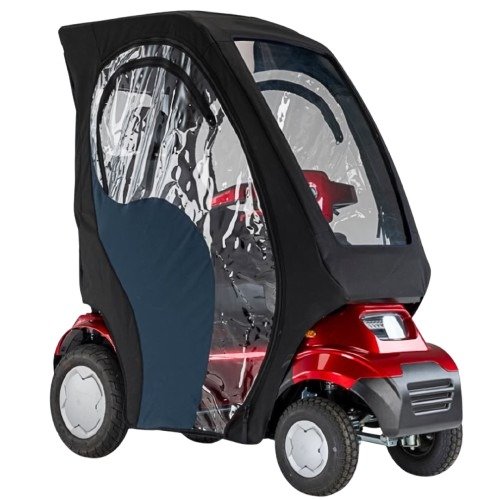
It all comes down to a single rule. The safest legal posture is a pedestrian speed device used sidewalk first, and a faster machine is a local law conversation you should have before you ride it on a roadway. Shopping for an enclosed scooter or a scooter for two? Our guides cover whether enclosed scooters are street legal and where two seater scooters can ride, and the California enclosed scooter guide goes deep on the one state that asks us most.
Three in-stock chairs that map to the legal points
- #1Best overall
Forcemech ARK Travel-Ready Portable Electric Wheelchair
The lit everyday chair for sidewalk-first riding with the occasional road edge. At a 4 mph top speed it stays in clean pedestrian-band territory, and it ships standard with an LED headlight and an automatic rear brake light, the exact visibility kit a road-edge rider benefits from at crossings and on a poorly lit shoulder. Its pneumatic tires and 15 mile range handle curb cuts and rough edges on a longer outing.
See price & details- Pros
- 4 mph keeps it in the pedestrian band for clean sidewalk-first use
- Standard LED headlight and automatic rear brake light for road visibility
- Pneumatic tires soak up curb cuts and rough shoulders
- Folds and breaks down for car transport
- Cons
- 330 lbs capacity is lower than a heavy-duty cruiser
- 15 mile range trails the longer-distance chairs here
- #2
Shoprider 6Runner 14 Heavy Duty Electric Wheelchair - 888WNLLHD
The pedestrian-classification cruiser. At a 5 mph top speed it sits squarely in the no-license, no-registration, sidewalk-first band most states treat as a pedestrian device. Six points of contact and a stable frame make it a steady outdoor sidewalk chair for curb cuts and crossings, and its 21.3 to 23.8 mile range covers longer sidewalk outings. It carries up to 450 lbs, the highest capacity of the three.
See price & details- Pros
- 5 mph keeps it in pedestrian-classification territory
- 450 lbs capacity, the highest of these three chairs
- Six points of contact for a stable outdoor ride
- 21.3 to 23.8 mile range for longer sidewalk trips
- Cons
- No standard lights for low-light road-edge visibility
- 277 lb product weight makes it less travel-portable
- #3
Outrider Coyote 4WD All Terrain 4x4 Wheelchair
The high-speed context, not the everyday recommendation. At 17 mph it is the chair where road-edge rules like Maine's under-35-mph provision actually apply and where road use becomes a local-law decision. It ships with a lights package, and its own FAQ notes operators have been told it may be ridden on the road or sidewalk where situations call for it. Treat it as a recreational off-road device given the price and the crate shipping, not a daily sidewalk cruiser.
See price & details- Pros
- 17 mph and 120 mile range for serious off-road use
- Quad-motor 4WD with a lights package included
- 22 inch tires and 6.5 inch ground clearance for trails
- Cons
- 17 mph raises road-edge and local-law questions a slow chair avoids
- 300 lbs capacity is the lowest of the three
- Ships in a crate and built for trails, not an everyday pedestrian chair
Frequently asked questions
Can you drive a motorized wheelchair or mobility scooter on the road?
In most US states you may use the road, but only at the edge and only where there is no usable sidewalk. A standard power wheelchair or mobility scooter is classed as a pedestrian, so it rides the sidewalk first and takes the road edge facing oncoming traffic as a fallback. The faster the machine, the more it interacts with road and vehicle law, so a 3 to 4 mph daily chair is the clean case and a 17 to 25 mph recreational machine is where you should confirm the rule with your own state and city. This is general information, not legal advice.
Do you need a license for an electric wheelchair or mobility scooter?
No. You do not need a driver license to use a standard electric wheelchair or mobility scooter in the states that class it as a pedestrian device or exclude it from the vehicle definition, which is most of them. Licensing attaches to motor vehicles. The answer is cleanest below 8 mph. Above the speed cap some states write into their definitions, a device is outside the wheelchair wording and may fall under that state's motorized scooter or similar device rules, so check your state row in the table.
Are electric wheelchairs considered pedestrians?
Yes in most states. New York Vehicle and Traffic Law section 130 defines a pedestrian as any person afoot or in a wheelchair, California Vehicle Code section 467 counts a person with a physical disability using a self propelled wheelchair as a pedestrian, Texas Transportation Code section 552A.0101 says a motorized mobility device user is considered a pedestrian, and many other states carve wheelchairs out of the definition of vehicle, which takes them out of the licensing and registration rules even where the word pedestrian is never used. Pedestrian classification is why the chair follows sidewalk and crosswalk rules instead of road and licensing rules.
Do mobility scooters have to use the sidewalk?
Yes, where a usable sidewalk exists. The shared US rule is sidewalk first. You ride the sidewalk wherever one is available, cross at the crosswalk where the intersections have signals, and yield to vehicles if you cross elsewhere. You move to the shoulder or the edge of the road, facing oncoming traffic, only on stretches with no usable sidewalk. Pennsylvania and Maryland let cities set their own sidewalk rules for mobility devices, so check locally there.
Do you need insurance or registration for a mobility scooter?
No. A standard electric wheelchair or mobility scooter treated as a pedestrian device needs no vehicle registration, no plate and no mandatory vehicle insurance. Louisiana says so by name for registration and insurance, Idaho exempts motorized wheelchairs from titling and registration, and the other pedestrian states get there by excluding the device from the vehicle definition so the insurance law never reaches it. Some riders add personal liability coverage by choice, often as a rider on a homeowner or renter policy, but that is optional rather than required.
Which states have a speed limit for mobility scooters?
Delaware, Ohio, Oklahoma, Rhode Island, Texas and West Virginia define a motorized wheelchair or mobility device as one incapable of more than 8 mph. Connecticut excludes a battery wheelchair from the motor vehicle definition only up to 15 mph, North Carolina excludes from the vehicle definition a mobility device limited by design to 15 mph, and Louisiana's electric mobility aid is one that cannot exceed 20 mph. Most other states set no speed in the wheelchair wording and instead cap the Segway style personal mobility device at 12.5 to 20 mph. The table gives each state's figure.
Can I ride a mobility scooter in a bike lane?
It depends on the state. Oregon and Rhode Island give a motorized wheelchair rider the rights and duties of a bicyclist in a bike lane or path, Louisiana lets an electric mobility aid use marked bike paths and lanes, and several states leave bike paths to the city. Where the statute is silent, treat the bike lane as part of the road edge and use it only where there is no usable sidewalk.
Is a 25 mph standing scooter or a 17 mph all terrain chair a pedestrian device?
Not reliably. A machine that fast sits above the speed cap several states write into their definitions, so in those states it is outside the wheelchair wording. Under the ADA a chair designed for a person with a mobility disability stays a wheelchair whatever its speed, while a standing scooter or 4x4 sold for general use is an Other Power Driven Mobility Device that a venue may assess for safety. Plan a 17 to 25 mph machine as a road and private property vehicle, use its slow mode on any shared sidewalk, and check your state row and your city before riding it on a public road.
Sources & references
- ADA.gov - Wheelchairs, Mobility Aids, and Other Power-Driven Mobility Devices (OPDMD) Authority
- ADA.gov - Americans with Disabilities Act statute and accessibility requirements Authority
- California Vehicle Code section 467 - pedestrian includes a person in a motorized wheelchair Authority
- Forcemech - ARK Travel-Ready specifications (4 mph, LED headlight and rear brake light, pneumatic tires)
- Shoprider - 6Runner 14 (888WNLLHD) specifications (5 mph top speed, 450 lb capacity)
- Outrider - Coyote 4WD all-terrain wheelchair specifications (17 mph, lights package)
- US Department of Transportation, NHTSA, Federal Motor Vehicle Safety Standard No. 500, Low speed vehicles (49 CFR 571.500) Authority
- New York Vehicle and Traffic Law section 130, pedestrian includes a person in a wheelchair Authority
- Ohio Revised Code 4511.01, motorized wheelchair defined at 8 mph Authority
- Texas Transportation Code section 552A.0101, motorized mobility device users are pedestrians, 8 mph definition Authority
- Louisiana Revised Statutes 32:206, electric mobility aids Authority
- US Department of Justice, ADA Title II regulations, 28 CFR 35.104 (wheelchair and other power driven mobility device defined) and 35.137 (mobility devices) Authority